
Free Word Problem Solver with Step-by-Step Solutions
AskMath's word problem solver turns a written question into math you can follow. Type the problem, upload a photo or PDF, use your camera, enter a formula, or draw the problem. AskMath identifies the known values and unknowns, builds the equations, explains each step, and lets you ask follow-up questions when part of the reasoning is unclear.
How the Word Problem Solver Helps You Learn
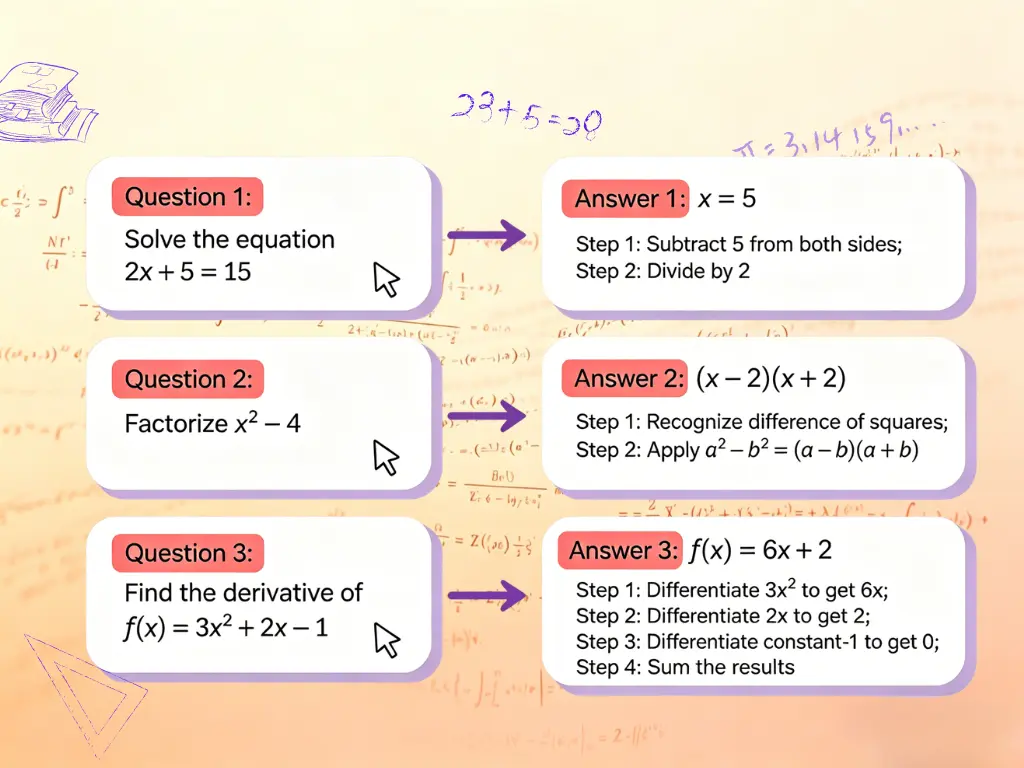
Turn the Question into a Clear Math Setup
Word problems often feel difficult because the math is hidden inside the wording. AskMath separates the given information from what you need to find, defines useful variables, and shows how the quantities are related. You see how the equation is built before any calculation begins, so the setup is easier to reuse on similar problems.
Follow Each Step and Check the Result
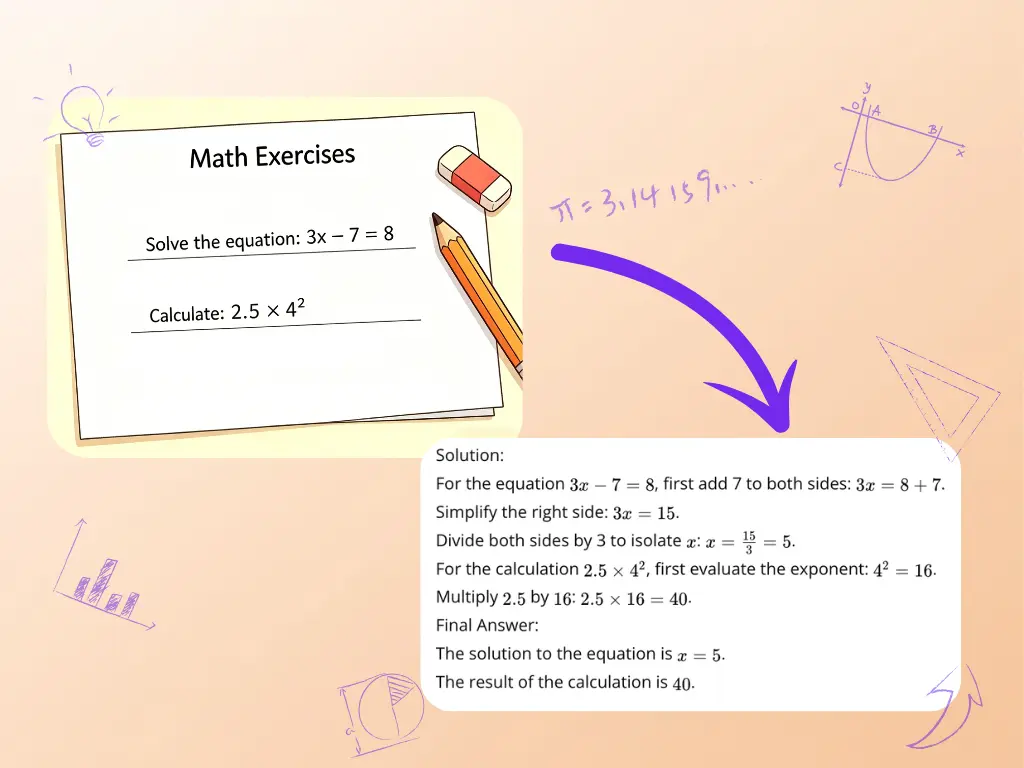
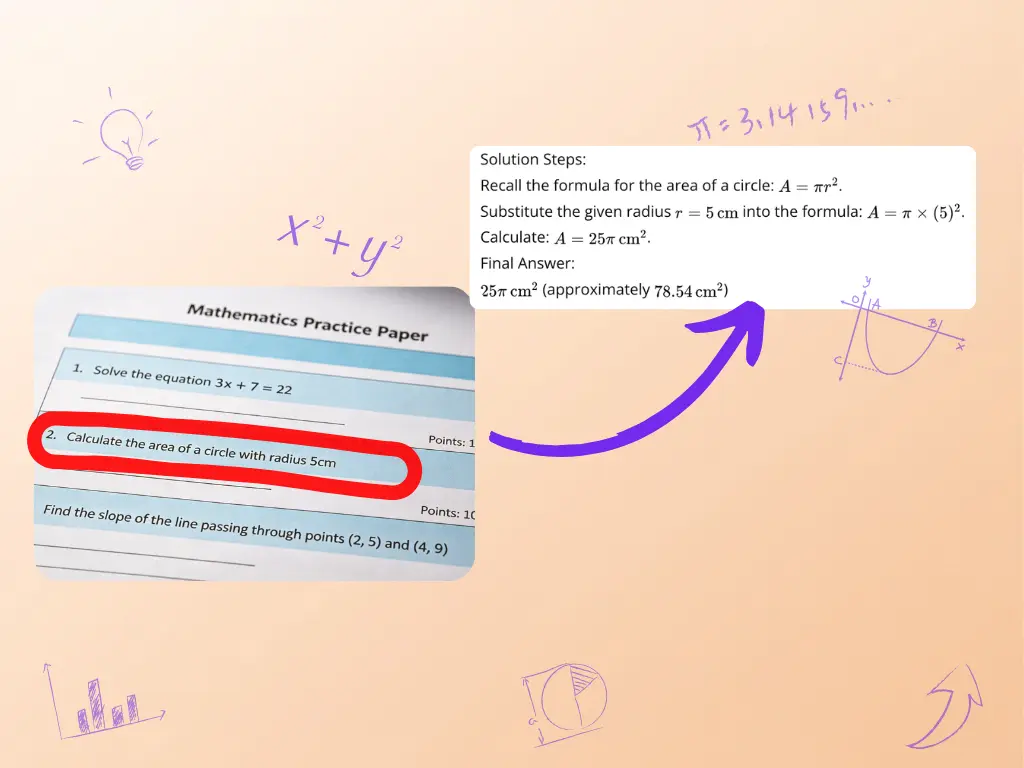
The solution explains why each operation is used instead of showing only a final number. AskMath can break the work into smaller steps, keep units visible, and check the result against the conditions in the question. For another way to explore the same problem, open the AI math solver and ask for a different method or a simpler explanation.
Choose the Input Method That Fits the Problem
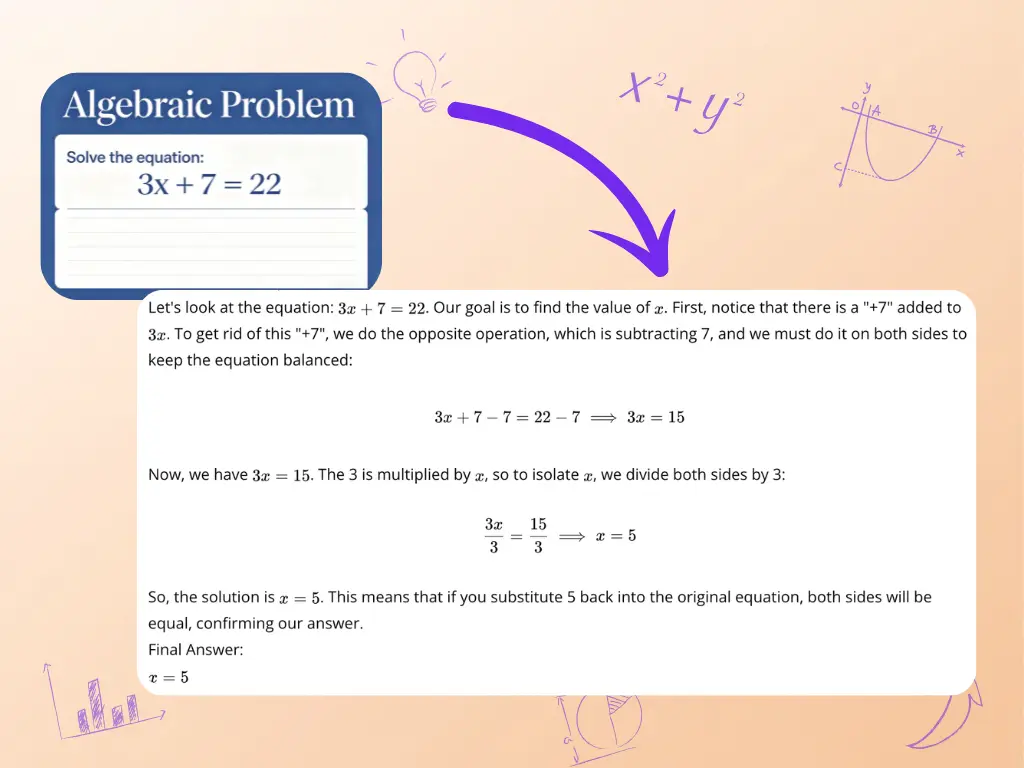
Type a question, take or upload a photo, add a PDF, enter a formula, or use the drawing board for a diagram. After AskMath reads the problem, you can correct any detail before working through the solution. When a problem depends on a function or graph, use the graphing calculator to explore it visually.
How to Use the Word Problem Solver
Add the Complete Problem
Type the question or upload it from a photo, camera, or PDF. Include every number, unit, condition, and diagram so the solver has the information needed to interpret the problem correctly.
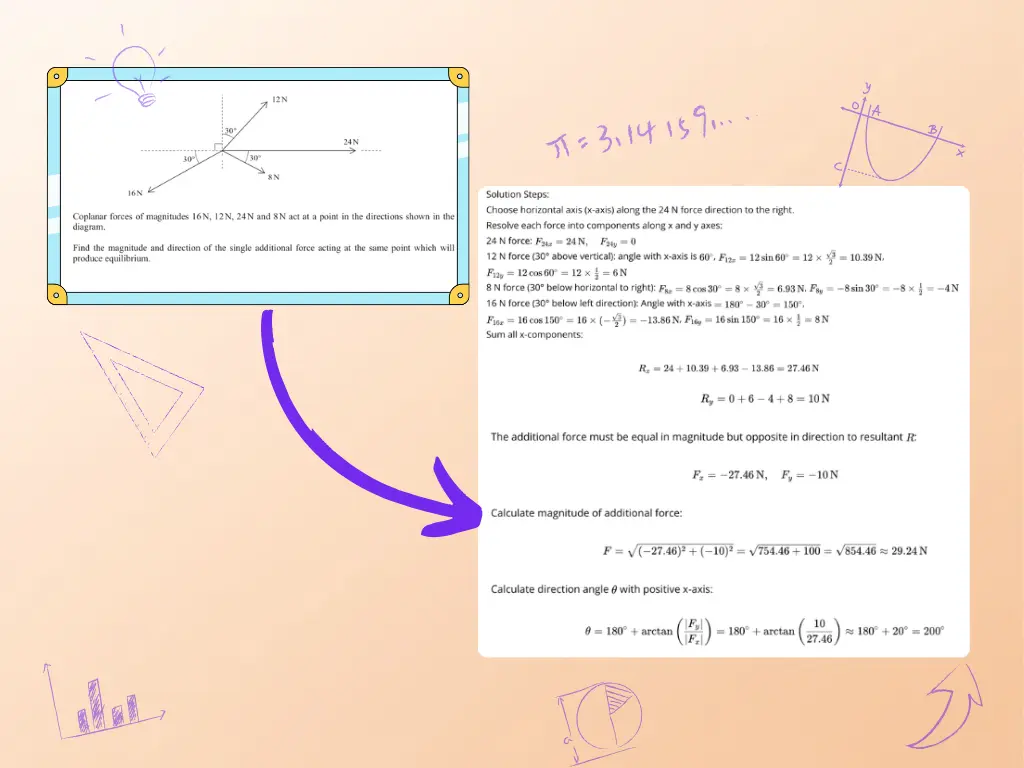
Review the Setup and Solution Steps
Check the identified values and unknowns, then follow the equations one step at a time. Pay attention to the explanation, units, and final verification instead of copying only the answer.
Ask About Any Step You Do Not Understand
Ask why an equation was chosen, request a simpler explanation, or explore another method. Follow-up questions help you connect the current solution to the next problem you try on your own.
Word Problem Solver Examples and Use Cases
Turn Everyday Questions into Equations
Use the solver for everyday questions about prices, quantities, rates, or comparisons. It identifies what is known, defines what needs to be found, and shows how the facts become equations. For example, if 30 adult and student tickets bring in $210 at $10 and $5 each, the conditions a + s = 30 and 10a + 5s = 210 give 12 adult tickets and 18 student tickets. Substituting those values into the original conditions checks the result.
Algebra Problems with Rates, Ratios, and Ages
Use the math word problem solver for distance and rate questions, mixtures, proportions, consecutive numbers, and age relationships. It shows how phrases such as ‘twice as many,’ ‘five years later,’ or ‘at the same rate’ translate into mathematical expressions. For deeper concept review, continue with the AI math tutor.
Geometry and Trigonometry in Context
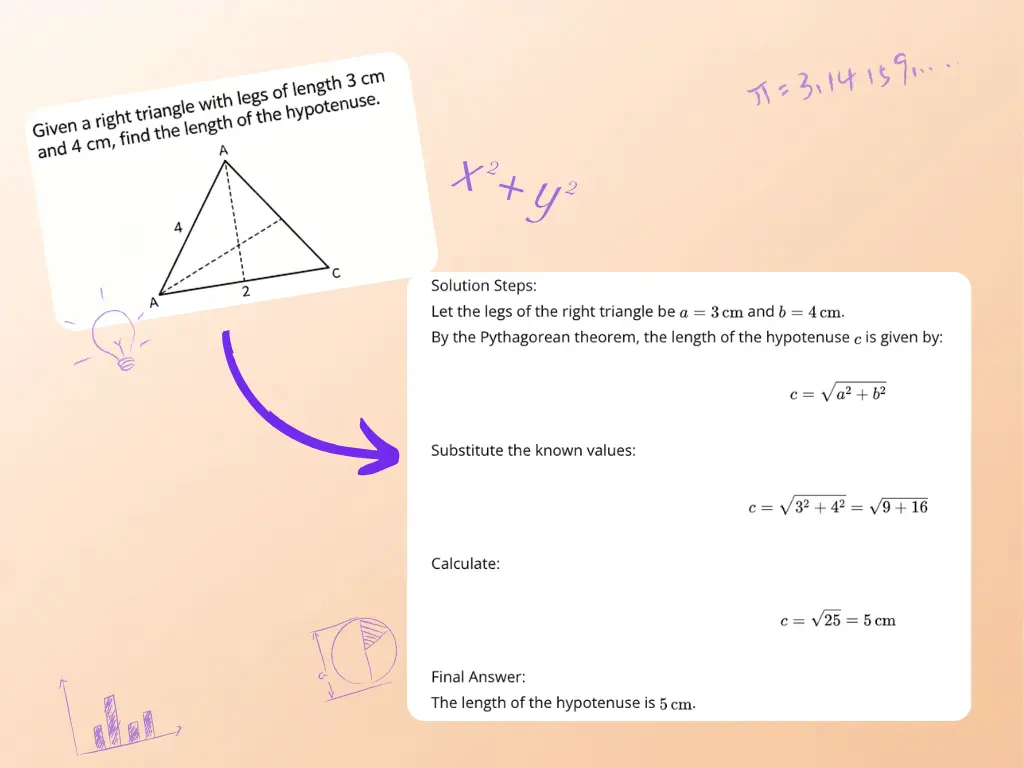
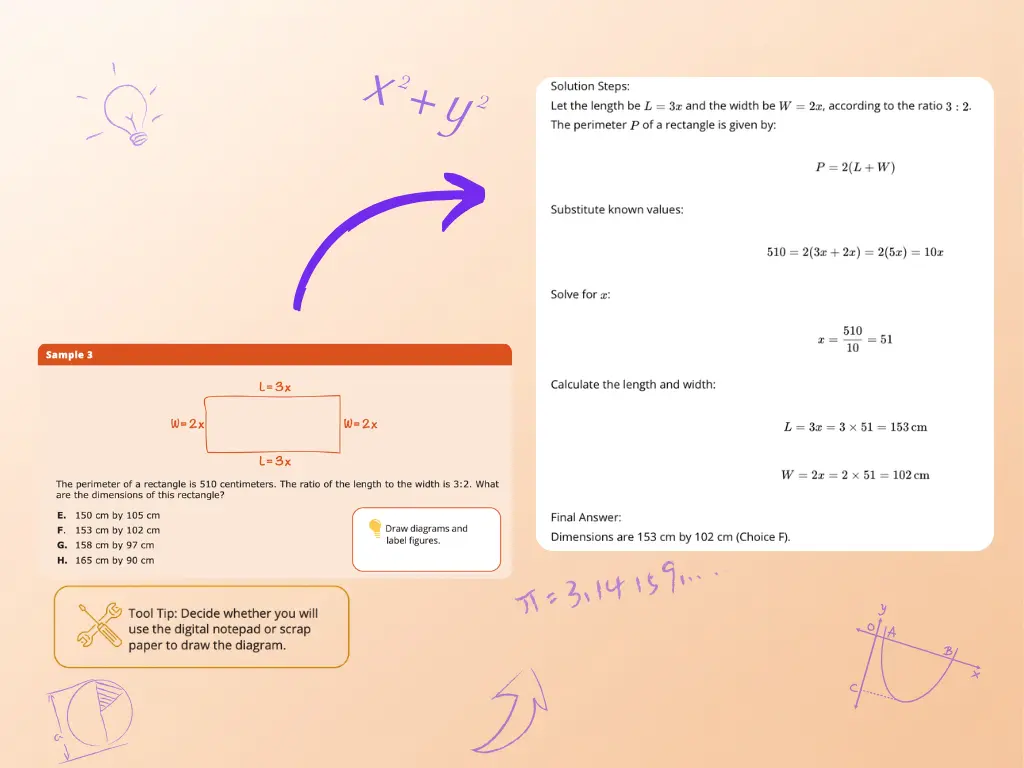
Work through questions about perimeter, area, volume, scale, angles, and indirect measurement. The solver can organize the dimensions and relationships from the text, while you check that the selected formula matches the diagram and that the final unit answers the question.
Statistics, Probability, and Financial Math
Break down problems involving averages, percentages, probability, simple or compound interest, and changes over time. AskMath helps identify which values belong in the calculation, but you should still review the assumptions and confirm that the result is reasonable in the original context.
Homework Review and Test Preparation
Compare the step-by-step explanation with your own work to find where the setup or calculation changed. During test preparation, practice identifying important facts before opening the solution. For support across other school subjects, use the AI homework helper.
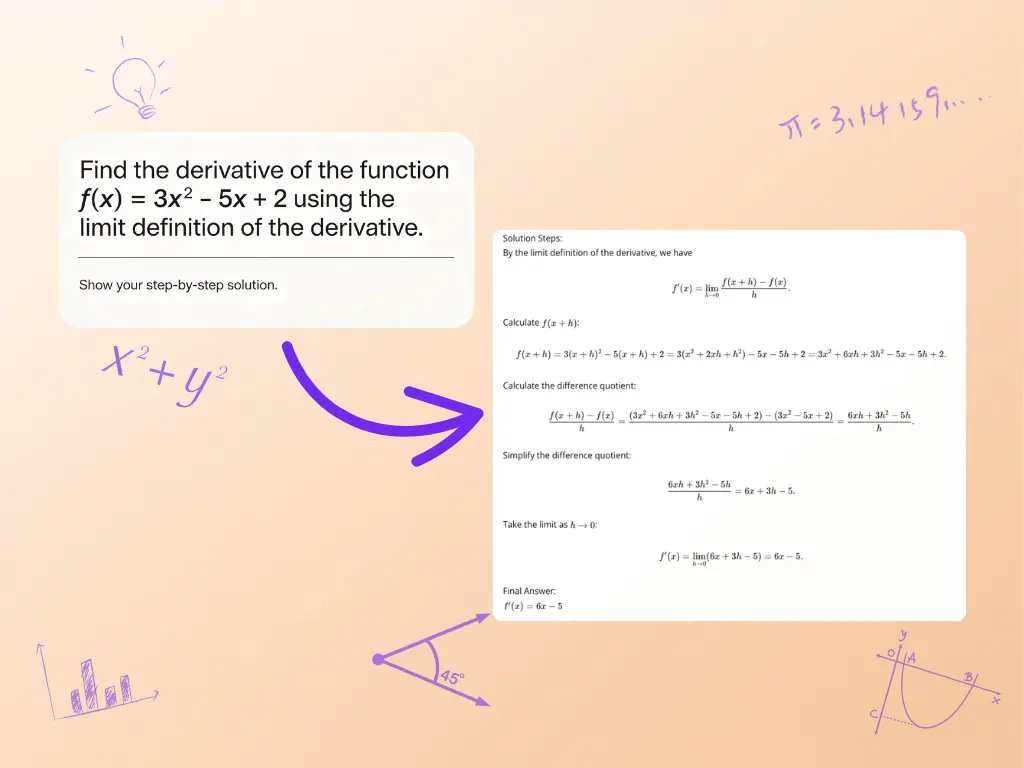
Why Use AskMath's Word Problem Solver
See How the Equation Is Built
The explanation connects each number and condition in the question to a variable, expression, or equation. This makes the setup visible instead of skipping directly to the calculation.
Learn from More Than One Method
When another valid approach is available, you can ask AskMath to explain it. Comparing methods can help you choose a process that matches your classwork and understand why both routes reach the same result.
Work Across Common Math Topics
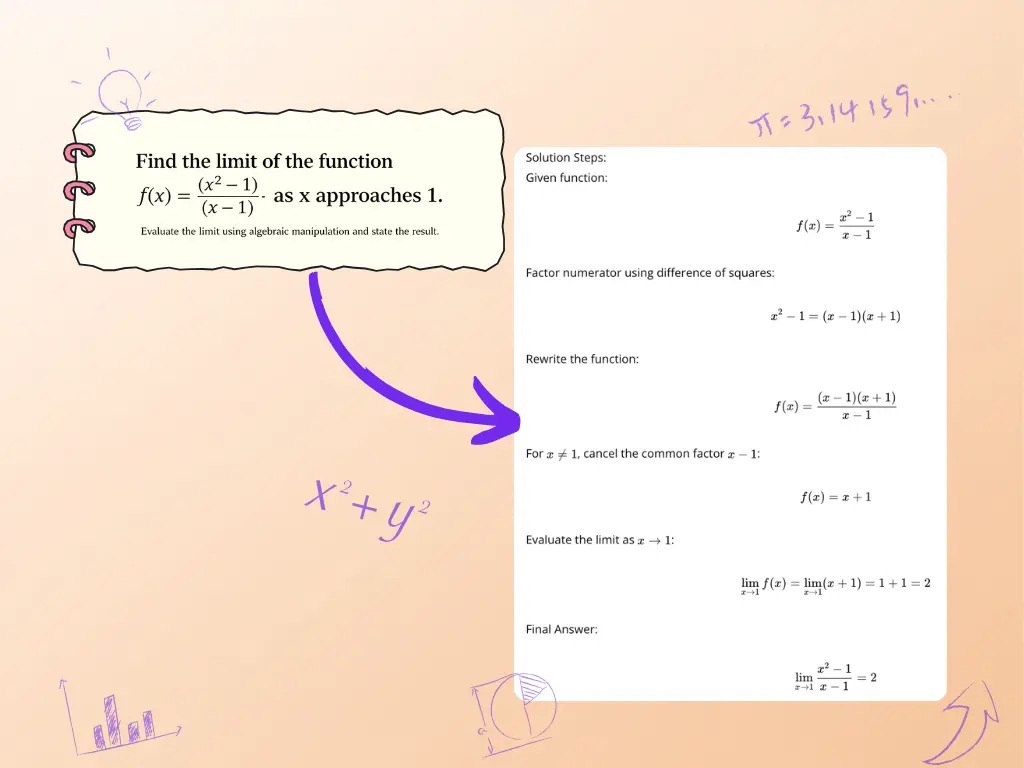
Use the tool for many arithmetic, algebra, geometry, trigonometry, calculus, statistics, and probability questions. Results depend on the information provided, so review the interpretation before relying on the answer.
Ask Follow-Up Questions
Continue the conversation when a variable, formula, or step is unclear. You can request a shorter explanation, more detail, or a new example that uses the same idea.
Start from Text, Images, PDFs, or Drawings
Choose the input method that preserves the problem most clearly. Multiple input options reduce retyping and make it easier to include formulas, diagrams, and longer questions.
Try the Core Features with Daily Free Credits
AskMath provides limited daily free credits for step-by-step solutions and follow-up learning. Paid plans provide more credits, advanced AI models, and higher usage limits when you need additional access.
What Students Say About AskMath's Word Problem Solver







Ready to Try the Word Problem Solver?
Word Problem Solver Questions and Answers
A word problem solver helps translate a written situation into mathematical relationships, equations, and solution steps. AskMath identifies relevant values and unknowns, explains how the setup follows from the wording, and works through the calculation. You should still review the interpretation and verify that the final answer fits the question.
It first identifies what the question asks, then separates known values, units, and conditions. It assigns variables to unknown quantities and connects the information with equations or formulas. The solution shows this setup before calculating, which helps you see how phrases in the question become mathematical operations.
Yes. AskMath supports photo, camera, and PDF input as well as typed text, formulas, and drawings. Use a clear, complete image and include every part of the question. After the content is recognized, check the numbers, symbols, diagram labels, and units before following the generated solution.
It can help with many arithmetic, algebra, geometry, trigonometry, calculus, statistics, probability, and financial math problems. Common examples include ages, rates, mixtures, percentages, areas, averages, and interest. Support depends on the clarity and completeness of the question, so complex or ambiguous problems may need clarification.
AskMath is designed to show the setup and the main reasoning steps, including the variables, equations, calculations, and final check when applicable. If a transition is too brief, ask a follow-up question for a slower explanation, an expanded calculation, or another method that uses the same information.
Read the original question again and confirm that the correct unknown was solved. Check the recognized values, equations, arithmetic, units, and any restrictions such as positive values or whole numbers. Substitute the result back into the original conditions. AI-generated solutions can be wrong, so use the explanation as learning support and verify important work.
AskMath provides limited daily free credits that you can use for core features such as step-by-step solutions and follow-up learning. Paid plans offer more credits, advanced AI models, and higher usage limits. Check the current pricing page for the latest plan details before choosing additional access.
Yes. You can ask why a variable was chosen, how an equation came from the wording, or whether another method is available. You can also request a simpler explanation or a similar practice example. Focused follow-up questions usually produce more useful clarification than asking the solver to repeat the entire answer.
Yes. AskMath works in a browser on phones, tablets, and computers. On a mobile device, you can type a problem or use the camera to capture it. Make sure the image is sharp, evenly lit, and includes the full question before checking the recognized text and solution.
AskMath processes the material you submit to generate a solution. Avoid uploading names, student records, account details, or other sensitive information that is not needed for the math problem. Review AskMath's current Privacy Policy for authoritative details about data handling, retention, and security before submitting confidential material.